Resident Memo is the Resident OS portal that brings reviews, alerts and owner reports into one sign-in dashboard.
A small operator should look for software that fits a lean team: every review site in one place, alerts that arrive without anyone checking, help writing replies, a clear read on what residents complain about, and a report an owner can use. Set-up and training time matter more than the length of the feature list. Large portfolios need things a small operator usually does not, such as enterprise permissions and custom integrations.
This post covers why reviews deserve a tool at all, how small and large operators choose differently, and a short checklist for a demo.
Does a small operator need reputation software at all?
If someone already reads every review on every site each week, replies within a day or two and tells the owner what changed, maybe not. Most small teams do not have that time, and reviews matter too much to leave to chance.
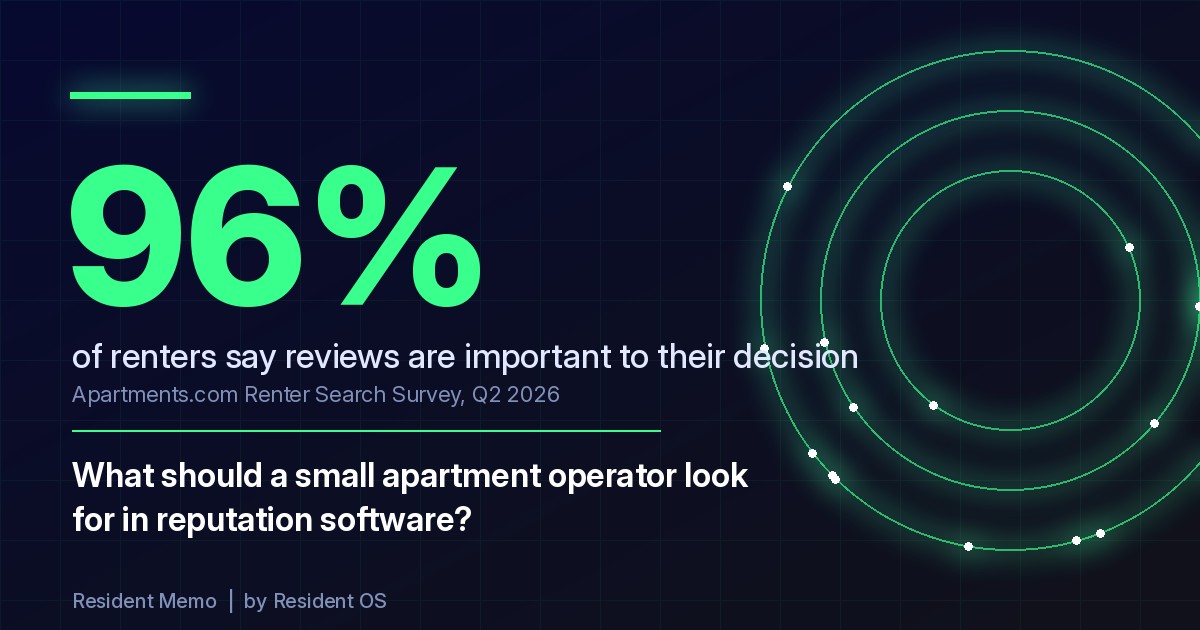
In Apartments.com's Q2 2026 renter survey, 96% of renters said reviews are important to their decision-making process. Zillow's 2025 research found that 37% of recent renters considered reviews of the property manager or landlord essential when choosing a rental.
Do small and large operators need different software?
Yes. Insights by Blueprint surveyed technology leaders at multifamily owners and operators about reputation management. Roughly 70% used a reputation platform, and adoption skewed toward larger operators. The report found a clear divide in what each group needs:
- Large operators prioritized centralized dashboards, consolidated reporting, enterprise permissions and APIs that connect to property management and CRM systems.
- Smaller operators emphasized affordability, intuitive interfaces, low training overhead and automation that reduces the burden on lean teams.
Its conclusion is the useful part for a buyer: platform choice should follow how your organization is set up and how it works, more than how long a vendor's feature list is.
The same survey found that most operators are reactive. They monitor reviews and reply, while few run proactive review-generation or sentiment programs. Tenant communication came up as the strongest driver of review outcomes.
What should be on a small operator's checklist?
Take these into a demo and ask to see each one, not hear about it:
- Every site in one inbox. Google matters most, but renters read reviews on other sites too. Ask which sites are included.
- Alerts. A new negative review should reach the right person the same day without anyone logging in to look.
- Reply help with a person in charge. Drafted replies save time. A person should approve each one before it posts.
- Topics, not just stars. The tool should show what reviews are about, such as maintenance, staff or noise, and whether each topic is rising or falling. Star averages hide this. Review scoring in the industry has moved the same way: J Turner Research's ORA score, for example, weighs feedback across 22 operational areas, not only ratings.
- A report the owner can read. If the team has to rebuild the numbers in a spreadsheet every month, the tool is not saving time.
- Fast set-up. Ask what the team has to provide, how long until the first reviews appear, and how much training is needed.
- Clear plans. Know what each plan includes before the demo ends.
What can a small operator skip?
Enterprise permission layers, custom API work and multi-region roll-ups are built for portfolios with many communities and teams. They add cost and training time. Blueprint's survey named deeper integration with property management systems as the greatest unmet need across operators, so do not choose a tool on an integration promise alone.
How does Resident Memo fit?
Here is how Resident Memo lines up with that checklist. It brings Google and other major review sites into one review inbox, with alerts when new reviews arrive. It shows sentiment and trends by topic, including maintenance, staff, amenities and noise. AI drafts review replies, and a person approves each one before anything posts. Owner-ready reports come already written. Set-up starts from a community name and website.
Frequently asked questions
Is a free review alert enough?
For a single community with few reviews, it can be a start. It does not cover every review site, topic trends or owner reporting.
Should AI write review replies?
It can draft them. A person who knows the community should read, edit and approve each reply before it posts.
How long should set-up take?
Ask each vendor directly and get the answer in writing. For a small team, anything that needs weeks of configuration or formal training is a warning sign.
To compare what each plan includes, see the Resident Memo plans.
Sources
- Apartments.com, Renter Search Survey, Q2 2026: 96%.
- Zillow Research, Renters: Results from the Zillow Consumer Housing Trends Report 2025 (Oct 27, 2025): 37%.
- Insights by Blueprint, How Multifamily Operators Approach Reputation Management: Survey Results (Dec 9, 2025): roughly 70%; small vs. large operator needs; reactive practices; communication; integration as an unmet need.
- J Turner Research, ORA FAQs: 22 operational areas.