ResidentMemo is the ResidentOS portal that brings reviews, alerts and owner reports into one sign-in dashboard.
Reputation is still treated as a marketing task because most operators measure it by what it does for leasing. In a December 2025 survey of multifamily technology leaders by Insights by Blueprint, respondents named attracting new tenants as their main goal for reputation management, and none named early detection of operational issues as a key goal. That leaves a lot of value unused. Residents review the experience of living at a community, so their reviews describe maintenance, communication and the move-in process long before those problems show up in a renewal report.
This post covers where the marketing habit comes from, what reviews tell operations, and how a regional team can start reading them as an operating signal.
Where does the marketing habit come from?
It started with how renters shop. Blueprint's respondents said prospects find and judge communities mostly through Google Search and Google Business Profiles, then listing sites such as Apartments.com and Zillow. Reviews sit right in that path, so the team that owns the listings usually ends up owning the reviews too.
The goals followed the ownership. In the same survey, attracting new tenants was the main goal, retention came second, and nobody chose rent growth or early issue detection. Blueprint's own reading of the result is that operators still view reputation mainly through a marketing lens, even though there is a lot to gain on the operating side.
What do reviews tell operations that marketing does not need?
A marketing team needs a high average, fresh reviews and fast replies. An operations team needs to know why a review was written.
Blueprint's respondents named tenant communication as the strongest driver of review outcomes, and operators noted that the way a problem was communicated often decided whether a resident wrote a positive or negative review, more than the problem itself. That is a service finding. It points to response times, status updates and follow-through, which are owned by the site team and the regional manager.
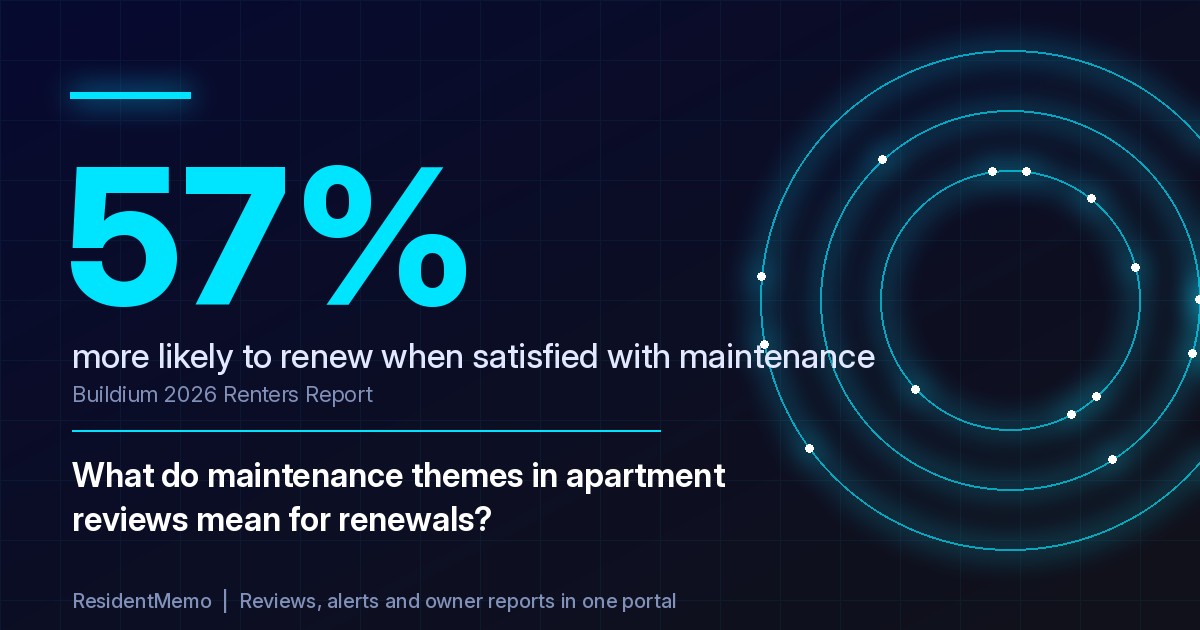
Renter research points the same way. Buildium's 2026 survey of 1,500 U.S. renters found that 84% of renters expect a response from their property manager within 24 hours, and that 20% of renters who plan to move named dissatisfaction with the rental experience as a reason. Buildium also found that when renters search for a home, the quality of their interactions with the property manager ranks second in influence, on par with online reviews.
What does it cost to leave reviews with marketing alone?
The main cost is time. A resident who writes about a slow repair in March and is still waiting in May has told you, in public, what the renewal conversation will sound like. If that review only reaches the person who writes the reply, the warning never reaches the person who can fix the cause.
Blueprint's respondents described the same gap from the tool side. Their most common unmet needs included better links between reviews and operational work orders, deeper connections to property management and CRM systems, and clearer ways to measure ROI. Most of them were also reactive: they monitored and replied, and far fewer ran structured programs on top of that.
Buildium's renewal advice assumes the same connection. Its list of steps for 2026 includes reviewing unresolved resident issues before renewal offers go out and tracking open maintenance requests by age and backlog. Reviews are one of the few places those issues appear in the resident's own words.
How can a regional team start reading reviews as an operating signal?
Keep marketing in charge of replies and add an operating read on top. A simple version:
- Read by topic once a week. Group new reviews by what they are about, such as maintenance, staff, noise, parking or move-in. A topic that shows up three weeks running is a pattern.
- Send each topic to its owner. Maintenance comments go to the maintenance lead, leasing comments to the leasing manager. The reply and the fix are separate jobs.
- Check the reply against the fix. If a reply promises a follow-up, someone should confirm the follow-up happened.
- Bring review topics to renewal planning. Before offers go out, look at what residents at that community have been saying for the past quarter.
- Report reviews as operations data. Show the owner which topics are rising or falling and what the team did about them, alongside the star average.
None of this needs a new department; the reviews just have to land where operations people already look.
How does ResidentMemo fit?
ResidentMemo puts reviews where the operating team can read them. It brings Google and other major review sites into one review inbox and sends alerts when new reviews arrive. It shows sentiment and trends by topic, including maintenance, staff, amenities and noise, so a regional manager can see a pattern without reading every review. AI drafts replies, and a person approves each one before it posts. Owner-ready reports come already written, so review topics can sit in the same conversation as the rest of the community's performance. Setup starts from a community name and website.
Frequently asked questions
Should marketing stop replying to reviews?
No. Public replies are part of how renters judge a community, and a consistent voice helps. The change is that the content of the reviews also goes to the people who run the property.
Who should own the operating read?
Usually the regional or community manager, since they can assign the fix. Marketing can keep the reply.
How often should operations look at reviews?
Weekly is enough to catch a pattern. A new negative review should still reach the right person the same day.
To compare what each plan includes, see the ResidentMemo plans.
Sources
- Insights by Blueprint, How Multifamily Operators Approach Reputation Management: Survey Results (Dec 9, 2025): goals (attracting tenants first, retention second, none named rent growth or early operational issue detection); discovery channels; communication as the strongest driver; reactive practices; unmet needs including review-to-work-order links.
- Buildium, The 2026 Renters' Report (survey of 1,500 U.S. renters, spring 2026): 84% expect a response within 24 hours; 20% of planned movers cite dissatisfaction with the rental experience; interactions with the property manager rank second in influence during search, on par with online reviews; renewal steps.