ResidentMemo is the ResidentOS portal that brings reviews, alerts and owner reports into one sign-in dashboard.
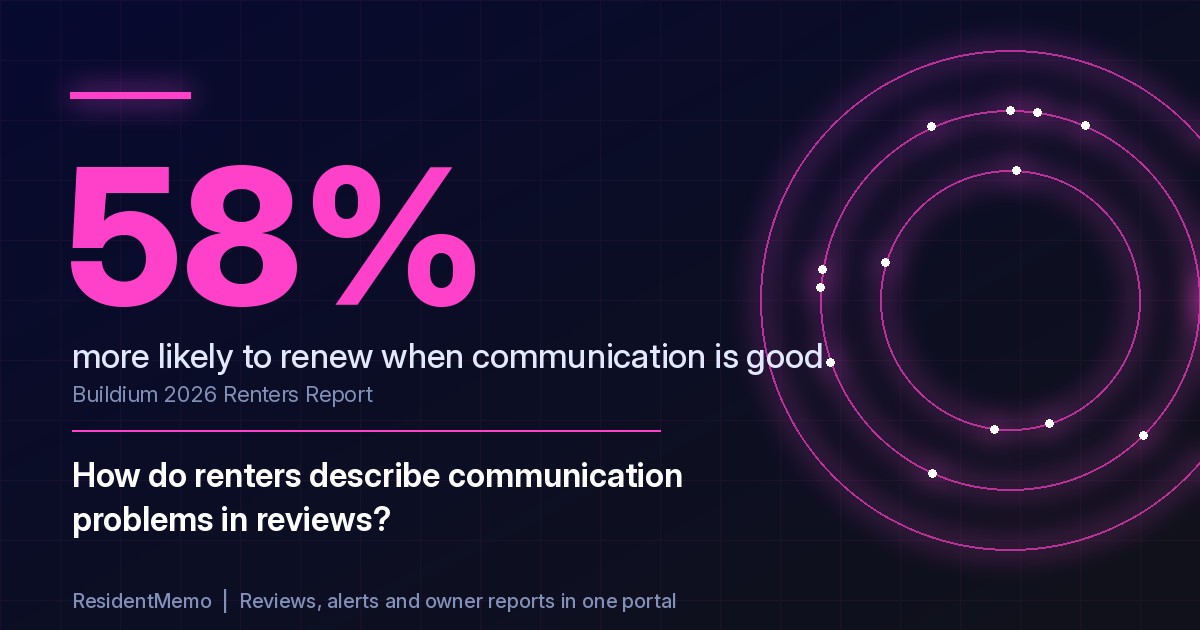
When renters write about communication, they rarely mean "send more emails." They mean whether anyone answered, whether the answer matched what happened next, and whether they had to chase the same issue twice. Buildium's 2026 Renters' Report finds that renters who are satisfied with communication are 58% more likely to plan to renew their lease and 77% more likely to recommend their property manager to a friend. Insights by Blueprint reports that operators overwhelmingly emphasized tenant communication as the core driver of reputation outcomes, and that communication — not necessarily the underlying issue — will often dictate whether a resident leaves a negative review. This post covers how those problems show up in review text, what the surveys measure, and what an operator can watch weekly.
What do renters say when communication fails?
They describe process, not slogans. Across review sites, the same patterns keep coming back: no reply after a work order, conflicting answers from office and maintenance, promises without a date, and silence after a complaint. Blueprint's operator survey put it in management language: fast response times, clear expectations and proactive updates were seen to prevent many negative reviews before they appear.
My read of what "bad communication" usually means in a review:
- No acknowledgment. The resident submitted a request and heard nothing.
- Slow or vague updates. Something was "being looked at" with no next step.
- Hand-offs that drop the ball. Leasing, office and maintenance each told a different story.
- Tone that feels dismissive once the resident follows up.
None of that requires inventing a quote. The surveys already tell you those gaps drive both ratings and renewal intent.
How strong is the link to renewal and reputation?
Strong enough to treat communication as an operations metric, not only a marketing one. In Buildium's 2026 survey, satisfied-with-communication renters were 58% more likely to plan to renew and 77% more likely to recommend the manager. Expectations are specific: 84% of renters expect a response within 24 hours, and 61% expect a response the same day or faster.
Multifamily Executive, covering AppFolio's 2026 Renter Preferences Report, adds the wider satisfaction frame: satisfied renters were 72% more likely to renew than dissatisfied ones, and vacancy was the top threat for 55% of property managers. Communication is one of the levers a site team controls when vacancy pressure is high.
Blueprint adds that respondents overwhelmingly cited attracting new tenants as their primary objective for reputation management, with retention secondary. Communication problems in reviews hurt both sides of that goal: prospects read the complaint, and residents who felt ignored are less likely to stay.
Which phrases and themes should an operator flag?
You do not need a custom linguistics model to start. Flag reviews that mention:
- No response / never called back / still waiting.
- Mixed messages between office, maintenance and after-hours lines.
- Broken promises on timing ("said it would be fixed by Friday").
- Difficulty reaching a person, including portal or phone dead ends.
- Feeling ignored after a complaint even when the repair was eventually done.
Buildium lists clear and consistent communication as the No. 2 thing renters want from property managers in 2026, right after fast, reliable maintenance responses. When maintenance and communication complaints land in the same week, treat them as one resident story, not two separate tickets.
What can a weekly check catch?
A short pass, once a week:
- Count new reviews that mention reply speed, updates or reaching staff.
- Compare that count with open work orders older than the site's stated response window.
- Reply to communication complaints with what was done and when, in plain words.
- Note whether the same building or shift keeps appearing.
- Carry one line into the owner update if the theme is growing.
Blueprint found the greatest unmet need in reputation management was integration, including deeper connections between reputation tools and PMS systems and better linkage between reviews and operational work orders. Even without a full integration, putting the review theme next to the work-order age is enough to start a useful conversation with the site team.
How does ResidentMemo help?
ResidentMemo's review inbox and topic trends surface communication and maintenance themes beside reply status, so an operator can see whether "no response" is a one-off or a pattern before it becomes the first line prospects read. Owner-ready reports come already written from the same material.
Frequently asked questions
Is communication really separate from maintenance in reviews?
Often not. Residents complain about the repair and about not hearing back. Blueprint notes that communication often dictates whether a negative review appears even when the underlying issue is something else.
What response speed do renters expect?
Buildium reports 84% expect a response within 24 hours, and 61% expect same-day or faster. That is the bar many reviewers use when they write "still waiting."
Can better review replies fix a communication problem?
Replies help the public record. The lasting fix is answering residents the first time with a clear next step, then reflecting that in the reply when someone posts.
To see which ResidentMemo plans include the review inbox and owner-ready reports, see the ResidentMemo plans.
Sources
- Buildium, The 2026 Renters' Report: 58%, 77%, 84%, 61%; communication as a top renter want.
- Insights by Blueprint, How Multifamily Operators Approach Reputation Management: Survey Results (Dec 9, 2025): communication as core driver; response times and updates; attracting tenants vs retention; integration unmet need.
- Multifamily Executive, Satisfaction Is the New Retention Strategy (Apr 24, 2026), reporting AppFolio's 2026 Renter Preferences Report: 72%, 55%.